
THE QUICK ANSWER
Start with the ball your venue or playing group uses, then check the manufacturer's intended use. Hole count is a useful clue, but it is not a universal way to choose a ball.

Buying pickleballs sounds simple until your usual game moves to a different venue. Rather than choosing by color or price alone, ask what court you are playing on and which ball the group normally uses. A consistent choice makes it easier to settle into a session.
What usually changes between the two designs?
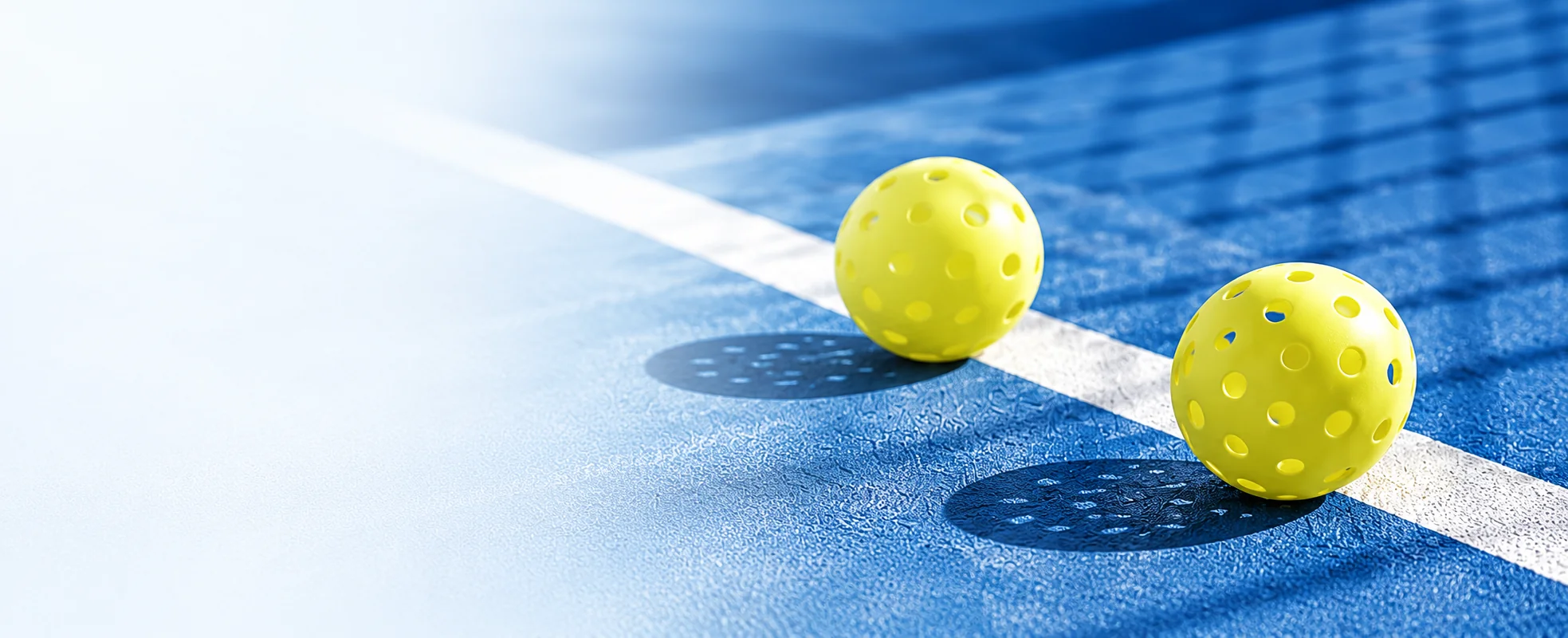
Indoor-style balls commonly have fewer, larger holes. Outdoor-style balls commonly use more, smaller holes and a firmer construction. Selkirk's comparison describes typical indoor balls with 26–30 holes and outdoor balls closer to 40. These are common patterns, not a guarantee about every model.
| What to compare | Common indoor-style design | Common outdoor-style design |
|---|---|---|
| Holes | Fewer and larger | More and smaller |
| Construction | Often softer | Often firmer |
| Buying cue | Intended court use on the packaging | Intended court use on the packaging |
| Final choice | Venue requirements and the specific model | Venue requirements and the specific model |
Avoid treating “26 holes” or “40 holes” as a complete specification. Read the exact product description, and ask the venue what it recommends if you are unsure.
Start with the session you are actually attending
Before buying a multipack, send your organizer a short question: “Which ball do you use at this session?” That is more useful than arriving with three different models and changing balls every game.
If you are organizing the game, choose one model for the session, tell the group ahead of time and bring a spare of that model. Keep indoor and outdoor packs labeled in your bag so another player does not have to guess which one you intended to use.
This approach also helps when a venue has an indoor court that does not match your usual gym-floor setup. The building's roof does not tell you the full playing situation. Confirm the court and the venue's preferred ball.
Check approval separately from intended use
For an event that requires approved equipment, check the exact brand and model in the current USA Pickleball approved ball list. Ask the event organizer which rules and ball model apply. An “outdoor” label alone does not establish approval for your event.
Approval and suitability are different questions: one concerns the model's status under the relevant equipment rules; the other concerns what your session uses. Verify both when needed.
A five-question buying checklist
- What court and venue am I attending?
- Which ball model does the organizer or regular group use?
- Does the manufacturer describe this model for that use?
- Does the event require an approved model, and have I checked its current listing?
- Can I buy a small quantity first, before committing to a larger pack?
Write down the model name after a session you enjoyed. That gives you a specific reference when you replace the pack, rather than relying on a color that several manufacturers use.
Where Netside fits
Netside plans to offer both indoor and outdoor pickleballs. Final models, specifications, approval status and availability are still being confirmed. The general comparisons in this guide are not claims about those upcoming balls.
While you wait, explore the planned Netside lineup or use our first-paddle checklist to build out the rest of your gear questions.
Sources & editorial note
Sources checked 2026-10-06. This guide was prepared with AI assistance and checked against the sources above. Read our editorial standards.
MEET THE BRAND
A new side of pickleball.
Netside's first US lineup is in development. Explore the paddle designs while final specifications are being confirmed.
Explore Netside paddles